
TALK TO ME
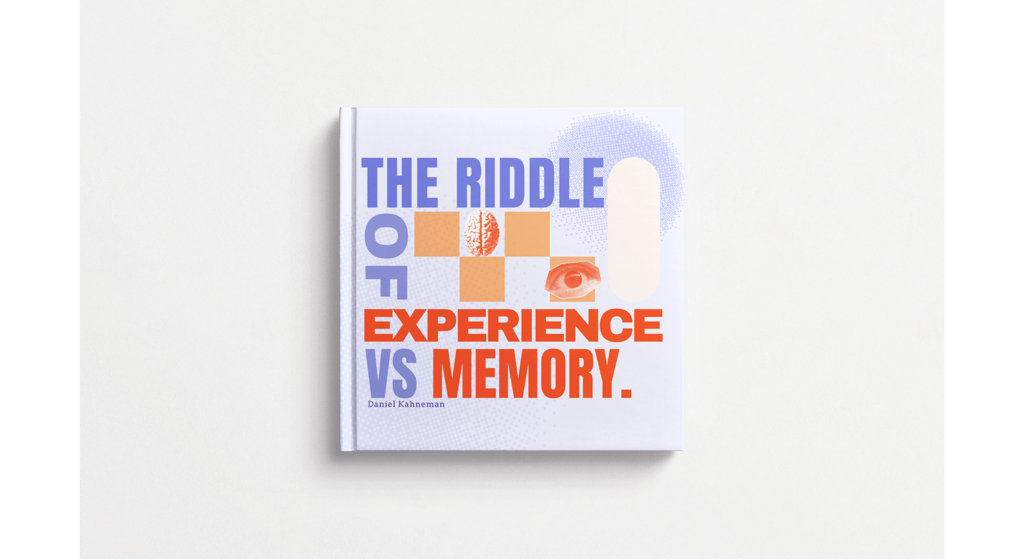
The Riddle of Experience vs Memory
This zine explores how spoken dialogue can be translated into a visual experience. Using a speech from Daniel Kahneman's The Riddle of Experience vs Memory TEDtalk, the zine explores how the experiencing self and the remembering self shapes our perception of happiness. The goal was to move beyond a traditional book presentation and to capture the pacing and emphasis of the speech, creating a format that is closer to listening rather than reading.
Visualizing abstract psychological concepts while maintaining clarity and engagement was challenging. The speech is intellectually dense and requires a system that highlights key shifts in emphasis without losing the natural flow. Translating tone into a book format was difficult as it required a controlled hierarchy and composition to avoid overwhelming the reader.
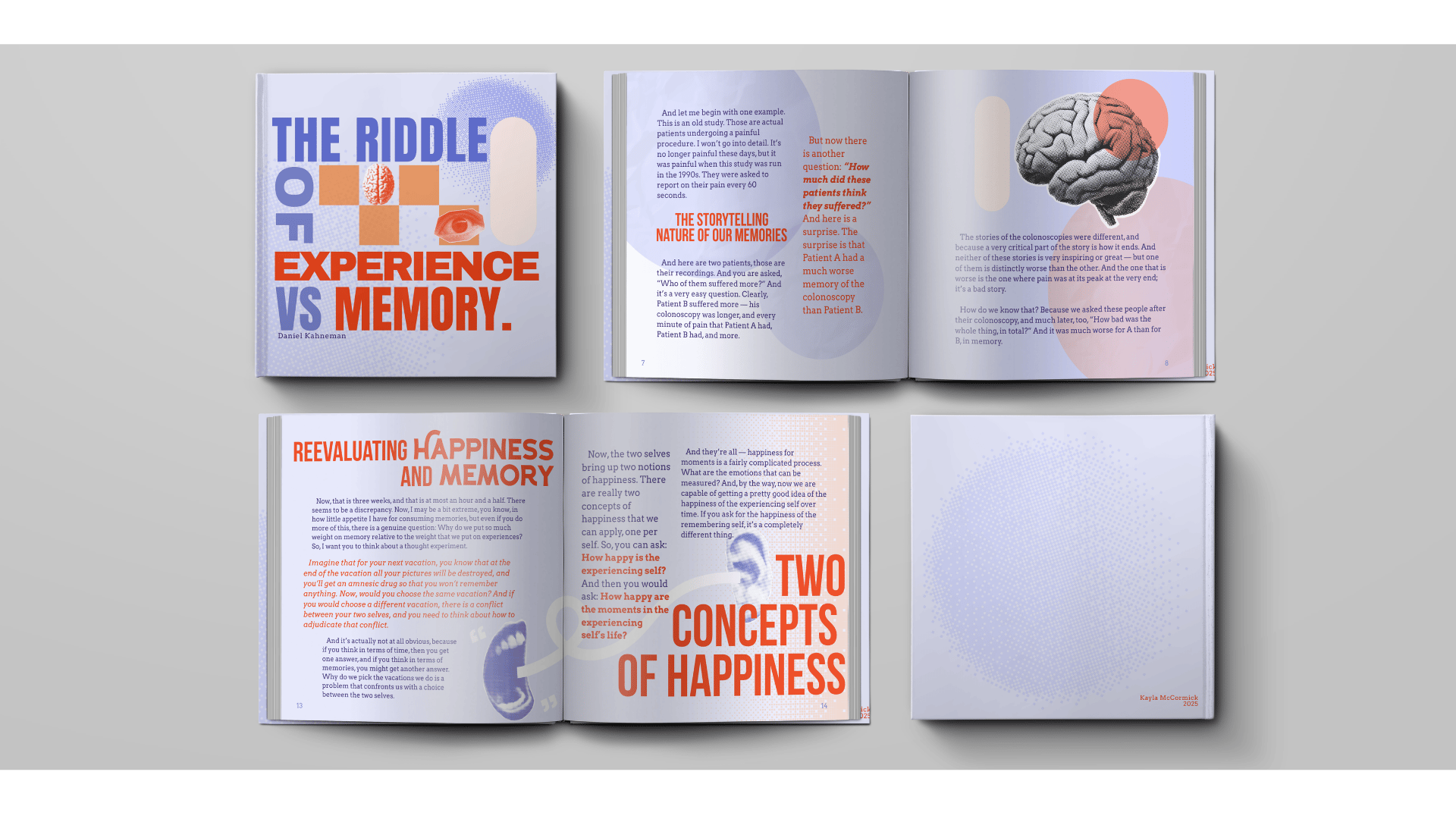
The final design uses typography and layout as a tool to guide the viewers pressing and interpretation. Bold type highlights important questions and moments of emphasis, while the body text carries the narrative. Halftone textures, cutout imagery, and unique shapes reference the distortion of someone's memory over time, while the simplistic color palette maintains cohesion.
Zine Design
Objective
Transform spoken dialogue from a TED Talk into a visually engaging zine that explores how typography, pacing, and imagery can communicate physiological ideas. The goals is to translate voice into form, capturing both the content and cadence of speech.
Concept
The zine is created to show the topic as a visual system. Rather than presenting text as a traditional essay, the layout is meant to mimic the rhythm of spoken word. To do this I wanted to emphasize questions, pauses, and shifts in tone. Large scale typography adds emphasis, while smaller body text carries the narrative.
Visual motifs such as halftone textures and abstract shapes reflect the distortion and subject of memory. The contrast between structure grids and expressive compositions mirrors the tension between logic and perception.
Visual Direction
Bold and oversized typography to highlight key questions and ideas
Limited color palette to create contrast and cohesiveness
Halftone imagery and cutout elements to show the fragmentation of memory
Dynamic layouts that guide pacing and simulate spoken emphasis
Source Material
Dialogue is used from a TED Talk by Daniel Kahneman. The speech focuses on the distinction between the experiencing self and the remembering self, and how these shape our view of happiness.